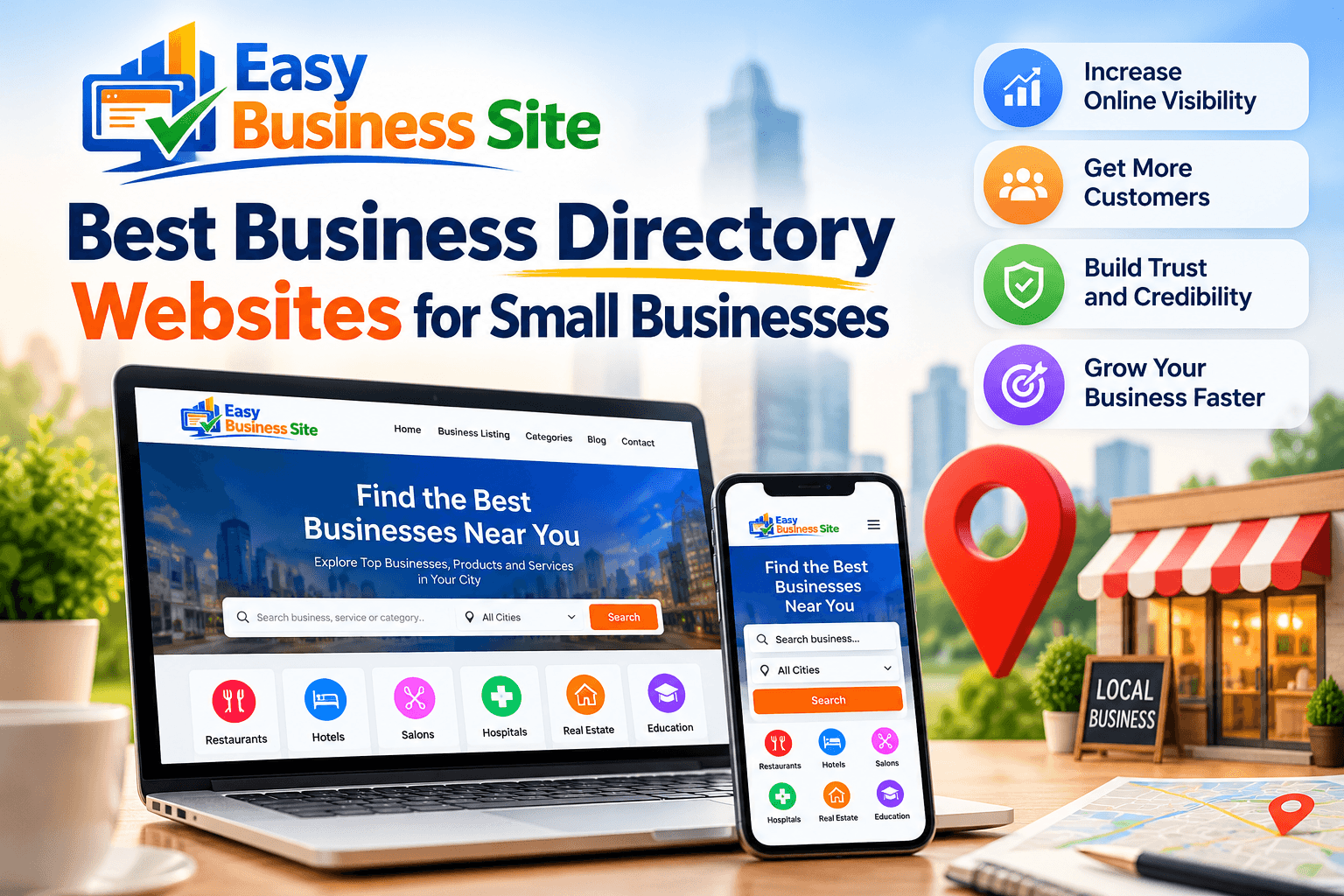
Running a small business is not easy. Whether you own a local shop, salon, restaurant, digital marketing agency, consultancy, or service-based company, attracting new customers is one of the biggest challenges. You may provide excellent products and services, but if people cannot find your business online, you could miss valuable opportunities.
This is where online business directories become useful. They allow businesses to display essential information such as their name, address, phone number, website, products, services, and business category. Customers can use these details to discover businesses, compare available options, and contact the right service provider.
Choosing the best business listing websites can help small businesses build an online presence without depending entirely on paid advertising. A well-maintained directory profile can support local discovery, improve brand credibility, and create additional opportunities to receive customer enquiries.
One platform worth exploring is Easy Business Site, which provides a place for businesses to showcase their services and make their information accessible to potential customers. Whether you are launching a startup or trying to expand an established company, using the right business directories can become a practical part of your marketing strategy.
In this guide, we will explain how business directories work, which platforms small businesses should consider, how to create an effective listing, and how to choose directories that match your business goals.
What Are Business Directory Websites?
Business directory websites are online platforms where companies can create public profiles containing information about their businesses. These platforms help users discover relevant businesses according to their location, industry, services, or specific requirements.
For example, someone searching for a web design company in Bangalore might visit a directory to compare agencies, explore their services, and find contact details. Similarly, a customer looking for a salon, restaurant, or repair service may use a local directory to identify suitable providers.
The best business listing websites generally make it easier for customers to find useful business information in one place. Depending on the platform, a listing may include:
- Business name and category
- Business address or service area
- Contact number and email address
- Official website URL
- Business description
- Products and services
- Photographs and business logos
- Working hours
- Customer reviews or ratings, where supported
A complete profile gives potential customers a clearer understanding of what a business offers before they make contact.
Why Small Businesses Need Online Business Directories
Small businesses often operate with limited marketing budgets. Investing in a website, advertising, social media, and other promotional activities can become expensive, especially during the early stages of business development.
Business directories provide another way to establish an online presence. Depending on the platform and its audience, a listing may help customers discover your company when they are actively looking for a particular product or service.
1. Improve Online Visibility
Your business website is important, but customers may not always discover it directly. They might begin their search on a directory, a map application, or a platform that compares businesses within a specific category.
Using the best business listing websites gives your company additional opportunities to appear where potential customers are searching.
For example, a small interior design company can create profiles on relevant local directories and professional platforms. Customers researching interior designers may then encounter the company through these additional channels.
2. Support Local SEO
Local search engine optimization helps businesses improve their visibility for searches related to particular locations. Accurate business information across relevant directories can help establish consistent references to your company online.
However, directory submissions alone do not guarantee higher rankings. Search visibility also depends on factors such as relevance, location, website quality, reviews, competition, and the overall quality of your online presence.
Businesses should therefore combine directory listings with a well-maintained website, useful content, and an accurate Google Business Profile when eligible.
3. Build Customer Trust
Customers usually want to understand a business before making a purchase or requesting a service. They may check its website, business details, photographs, reviews, and contact information.
A consistent and professional profile can make it easier for customers to verify these details.
Platforms such as Easy Business Site offer another opportunity for businesses to present their company information in an organized way. When creating a profile, use an accurate description and genuine information instead of exaggerated claims.
4. Create Additional Enquiry Opportunities
A directory listing can act as another entry point for prospective customers. Someone who discovers your company through a relevant business category may visit your website, call your business, or enquire about your services.
The actual number of enquiries will depend on the directory's audience, the quality of your profile, your industry, and customer demand.
5. Promote Your Business Cost-Effectively
Many directories offer free basic listings, while others provide paid upgrades or advertising packages. This allows small businesses to start with available free options and evaluate paid services only when there is a clear reason to invest.
Rather than paying for every available listing, focus on relevant platforms that support your target audience and business objectives.
Best Business Directory Websites for Small Businesses
Different directories serve different purposes. Some focus on local discovery, while others specialize in business-to-business sales, professional services, or industry-specific searches.
Below are several platforms worth considering.
1. Google Business Profile
Google Business Profile is an important starting point for eligible businesses that serve customers in person or within a defined service area.
It helps businesses manage how their information appears across Google Search and Google Maps. Depending on eligibility and profile quality, customers may find opening hours, directions, photographs, contact details, and reviews.
Best for: Local shops, salons, restaurants, repair services, consultants, and other eligible local businesses.
2. Justdial
Justdial is a well-known Indian business discovery platform covering numerous categories, including local services, healthcare, education, restaurants, and home services.
Businesses can explore its listing options to help potential customers discover their services. Available features and commercial terms can vary.
Best for: Local businesses that want to reach customers searching for services in Indian cities.
3. Sulekha
Sulekha focuses on connecting customers with service providers across different categories. It can be relevant to businesses offering home services, education, event services, and professional assistance.
Before purchasing a paid package, review the available features and evaluate whether the enquiries are relevant to your business.
Best for: Service-based companies and professionals.
4. IndiaMART
IndiaMART is primarily a business-to-business marketplace where buyers can discover suppliers, manufacturers, wholesalers, and product sellers.
It is particularly useful for companies selling products to other businesses rather than relying only on individual local customers.
Best for: Manufacturers, distributors, wholesalers, and B2B suppliers.
5. TradeIndia
TradeIndia is another B2B platform that helps businesses connect with buyers and suppliers across different industries.
Companies that manufacture, distribute, or export products may find it useful for developing commercial connections and presenting their offerings to potential buyers.
Best for: Traders, exporters, manufacturers, and industrial suppliers.
6. Bing Places for Business
Bing Places for Business allows eligible companies to manage their business information for discovery through Bing's local search ecosystem.
Maintaining accurate information on more than one relevant search platform can help customers who use different search engines discover your company.
Best for: Local businesses looking to maintain a broader search presence.
7. Apple Business Connect
Apple Business Connect allows businesses to manage information about their locations across Apple's services, including Apple Maps.
It can be especially relevant for businesses whose customers use Apple devices to search for places, get directions, or explore nearby services.
Best for: Businesses with physical locations that want to maintain accurate information on Apple services.
8. Facebook Business Page
A Facebook Business Page is not a traditional directory in every respect, but it provides a public business presence where companies can share updates, photographs, contact information, and promotional content.
Customers can also interact with the business and explore its offerings.
Best for: Local retailers, restaurants, salons, service providers, and community-focused businesses.
9. LinkedIn Company Page
LinkedIn is useful for presenting a professional company profile, sharing business updates, and connecting with other organizations.
For companies offering software development, consulting, recruitment, marketing, or other professional services, a LinkedIn presence can complement traditional directory listings.
Best for: Agencies, consultants, IT companies, and B2B service providers.
10. Easy Business Site
Easy Business Site is another option for businesses that want to establish a directory presence and showcase their services online.
Visit https://easybusinesssite.com/ to explore the platform and its available business listing options.
Businesses can consider using a directory profile to introduce their company, explain their services, and help prospective customers find relevant information.
For small businesses that are building their online presence, Easy Business Site can be considered alongside established search platforms and industry-specific directories. The right choice depends on your target market, business category, and the listing features currently available.
Before submitting your business, review the platform's listing requirements and available plans. Keep your information accurate and ensure your profile reflects the products and services you genuinely provide.
How to Choose the Right Business Directory
Not every directory is equally useful for every company. A manufacturer looking for wholesale buyers has different needs from a salon that wants to attract customers living nearby.
When evaluating the best business listing websites, consider the following factors.
Audience Relevance
Check whether the directory attracts people who are likely to need your products or services. A platform with a relevant audience can be more useful than a large directory that rarely attracts your target customers.
Business Category Availability
Choose a directory that supports your industry. Relevant categories help customers understand what your company does and make your listing easier to navigate.
Location Coverage
If your business serves customers in a particular city, prioritize directories that support local discovery. If you sell products across India or internationally, consider platforms that serve a wider market.
Listing Features
Review which details you can add to your profile. A useful listing may support your website, contact details, business description, service categories, photographs, and other relevant information.
Cost and Value
Some platforms offer free listings, while others charge for enhanced visibility or lead-generation services. Understand the terms before paying.
Do not assume that a paid listing will automatically produce sales or improve search rankings. Evaluate performance using actual enquiries and customer conversions.
Reputation and Accuracy
Choose legitimate platforms with clear listing policies. Avoid directories that encourage misleading information, mass submissions, or questionable link-building practices.
How to List Your Business on Easy Business Site
If you want to explore Easy Business Site as part of your online marketing strategy, follow these practical steps.
Step 1: Visit the Website
Open https://easybusinesssite.com/ and review the available business directory categories and listing options.
Step 2: Prepare Your Business Information
Before submitting your profile, gather your essential business details:
- Official business name
- Business category
- City and service area
- Phone number and email address
- Website URL
- Business description
- Products and services
- Relevant photographs or logo
Having these details ready makes the submission process easier.
Step 3: Select the Appropriate Category
Choose the category that best describes your business. For example, a digital agency should select a relevant web design or digital marketing category if available.
Accurate categorization helps visitors understand your business and improves the relevance of your listing.
Step 4: Write a Clear Business Description
Explain what your company offers, who your customers are, and which problems your services solve.
For example:
"Our company provides professional website design and digital marketing services for small businesses. We help companies build an online presence through responsive websites, search engine optimization, and practical digital solutions."
Use your own genuine business details rather than copying another company's description.
Step 5: Submit and Review Your Listing
Follow the platform's current submission instructions and complete any required verification or approval steps.
After publication, check that your business name, contact details, category, and website link are correct.
Step 6: Keep Your Profile Updated
Update your listing whenever your business information changes. If you add a service, change your contact number, or move to a new location, review your directory profiles and correct outdated information.
A current profile provides a better experience for prospective customers.
How to Optimize Business Listings for Better Results
Creating a listing is only the first step. A complete and useful profile is more likely to help customers understand your company.
When using the best business listing websites, follow these recommendations.
Use Consistent Business Information
Keep your business name, address, and phone number consistent across relevant directories. These details are often called NAP information.
Avoid creating unnecessary variations of your business name simply to include keywords. Accuracy should come first.
Write Unique Business Descriptions
Explain your services in clear, customer-friendly language. Mention your location and main services naturally when they are relevant.
Avoid repeating the same keyword excessively. A description should sound like a real business introduction rather than a collection of search terms.
Add Genuine Photos
Use authentic photographs of your premises, products, team, or completed projects where supported. Clear images help customers understand what they can expect from your business.
Include Your Official Website
Where permitted, add your official website so customers can explore your services in greater detail.
Make sure the website works correctly on mobile devices and includes clear contact information.
Track Enquiries
Record how customers discover your business and which platforms generate meaningful enquiries.
You can use dedicated contact links, appropriate analytics, enquiry forms, or customer questions to identify which directories are delivering value.
Over time, this information can help you decide where to focus your marketing efforts.
Common Mistakes to Avoid When Creating Business Listings
Even a well-designed listing strategy can become ineffective if profiles contain inaccurate or misleading information.
Avoid these common mistakes:
- Creating duplicate profiles: Multiple profiles for the same business and location can confuse customers and create maintenance problems.
- Using incorrect contact details: Outdated phone numbers or broken website links can lead to lost enquiries.
- Choosing irrelevant categories: Incorrect categories make it harder for customers to understand your actual services.
- Ignoring profile updates: Old opening hours and outdated descriptions create a poor customer experience.
- Expecting instant SEO results: Directory listings are one part of a broader marketing strategy, not a guarantee of rankings.
- Paying without checking value: Review pricing, terms, audience relevance, and lead quality before purchasing premium placements.
- Submitting to every directory available: Focus on trustworthy platforms that match your business instead of chasing a high number of submissions.
These principles apply whether you use established platforms or explore Easy Business Site for an additional business profile.
A Simple Business Listing Strategy for Small Businesses
You do not need to create hundreds of profiles in one day. A structured approach makes it easier to maintain quality.
Week 1: Establish the essentials
Set up or improve your Google Business Profile if eligible. Prepare your business description, contact details, official website, and photographs.
Week 2: Add relevant directories
Create profiles on suitable platforms such as Justdial, Sulekha, or relevant B2B directories, depending on your industry. Explore Easy Business Site as another possible directory for your company.
Week 3: Improve profile quality
Review descriptions, categories, website links, and business information. Correct any differences between your profiles.
Week 4: Measure performance
Check website visits, calls, enquiries, and other available indicators. Identify the platforms that generate useful customer interactions and prioritize maintaining them.
This process helps you build a manageable directory presence without wasting time on irrelevant platforms.
Frequently Asked Questions
1. What are the best business directory websites for small businesses?
Useful options include Google Business Profile, Justdial, Sulekha, IndiaMART, TradeIndia, Bing Places for Business, Apple Business Connect, Facebook, and LinkedIn. The most suitable platforms depend on your industry, location, and target customers.
2. Are business directory websites free?
Some directories offer free basic listings, while others charge for premium placements, advertising, or additional features. Review the current terms of each platform before submitting your business.
3. Can business listings help with local SEO?
Accurate and relevant listings can support local SEO by providing consistent business information and additional discovery opportunities. However, they do not guarantee higher rankings, and results depend on several factors.
4. How many directories should a small business use?
Start with a manageable selection of relevant, reputable directories. Focus on the quality, accuracy, and usefulness of your profiles rather than trying to submit your business to hundreds of websites.
5. Is Easy Business Site suitable for small businesses?
Easy Business Site is an option to explore if you want another place to present your business information online. Review the available categories, listing requirements, and current plans to determine whether they match your needs.
6. What information should I include in a business listing?
Include your official business name, category, contact details, website, location or service area, business description, and relevant photographs wherever the platform supports them.
7. Do business directory listings guarantee more customers?
No. A listing creates another opportunity for discovery, but actual results depend on customer demand, competition, profile quality, platform visibility, and the relevance of your services.
Conclusion
Building a successful small business requires more than offering a good product or service. Customers must also be able to discover your company, understand what you offer, and contact you easily.
Using the best business listing websites can support this process by providing additional online discovery opportunities, strengthening consistent business information, and helping potential customers find relevant services.
Start with the platforms that matter most to your audience. Local businesses should prioritize suitable local search and directory platforms, while manufacturers and suppliers may benefit more from B2B marketplaces. Professional companies can also use social and business networking platforms to build credibility.
You can explore Easy Business Site at https://easybusinesssite.com/ as another option for presenting your business online. Combine relevant directory profiles with a professional website, useful content, accurate contact details, and consistent customer service.
Remember that online visibility develops over time. Focus on providing accurate information, maintaining your profiles, and measuring the enquiries each platform generates. A thoughtful and consistent approach can help your business build a stronger digital presence and create more opportunities to connect with potential customers.
Comments (0)
No comments yet. Be the first to share your thoughts!
Leave a Comment